


What Do Architects Do During Construction?
Learn what architects do during construction—from reviewing drawings and coordinating contractors to protecting design intent, budget, and project timelines.
Estimated Reading Time: 7-9 minutes
Welcome to the sixth and final blog in our series: What Do Architects Do During Construction?
In this instalment, we caught up with Adam Morris, Director of Construction Administration to discuss how an architect’s involvement doesn’t end with design but continues through to the build—and how vital this is to delivering a project on time, on budget, and true to the design vision.
“The best results come when both architect and client embrace collaboration, balancing creativity along with the practical realities of time and budget.”
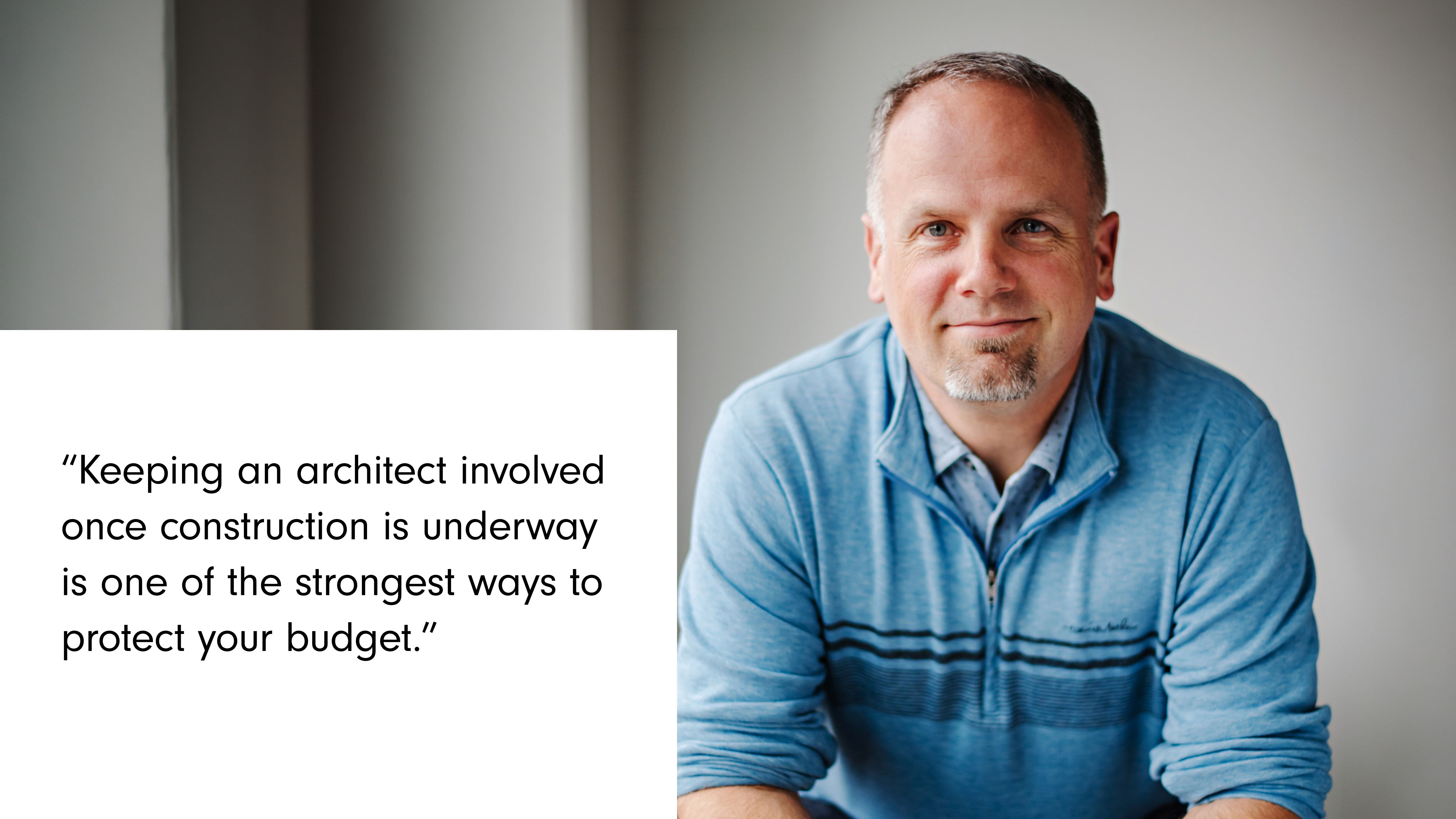
Introduction: I’m Adam Morris, Director of Construction Administration at MSS. In my role, I oversee the construction phase of a project. This involves acting as a liaison between the client and contractor(s), reviewing construction progress and quality, managing payments and change orders, and resolving issues that arise on site.
I act as the owner's representative to help safeguard design intent and keep the construction of the project on schedule and within budget. With over 20 years of experience in construction, working as an on-site superintendent as well as in the office as a project manager in a general contracting setting, I bring a unique perspective to MSS that bridges architectural intent with the realities of construction.
Interviewer: Why is it important to involve an architect when the construction phase of a project begins?
Adam: Once construction starts, the architect remains closely involved to ensure that every detail aligns with the original design vision. Day to day, we review shop drawings, product reviews, and RFIs (Requests for Information) submitted by contractors, and answer their questions to keep the project on track. If a question comes up about a detail or a material, it’s our job to get answers quickly so the contractor can keep moving forward with construction. My background in general contracting (GC) helps me quickly understand what’s happening on site, which keeps communication open and efficient between the contractor and our office. That collaboration keeps everyone aligned and true to design intent.

Interviewer: At what point in the design and construction process do you become actively involved in the project?
Adam: I’m brought in at the very earliest stage of project development, often as early as a site fit-test or schematic design where construction phasing and site access may affect constructability of advancing the project’s design. In the later stages, I review material issues before drawings are sent to contractors to get cost estimates. That “pre-look” gives us a head-start on identifying anything that could become problematic once the contractor is on site. My involvement at this stage helps us minimize change orders, delays, and cost impacts.
Interviewer: Can you share an example of how you kept a project on track while ensuring the client’s vision was maintained?
Adam: I work hand-in-hand with our team’s project architects throughout contract administration. If something on site can’t be built the way it's drawn, I bring this issue back to them and we come up with an optimal solution that keeps the design intent intact while minimizing cost to the owner.
Sometimes that means changing materials partway through a build. For example, in a recent project, a piece of structural HSS (Hallow Structural Section) steel tubing that was part of a front-entrance canopy sat a bit too high. We coordinated with the general contractor (GC) to review the curtain wall and exterior glazing materials that had already been ordered. We then assessed whether the small design adjustments recommended by our architects—required to accommodate additional as-built conditions—could be incorporated into the canopy without compromising the original design intent. The process is highly collaborative, bringing together the GC, subtrades, and our office.
Interviewer: What are some of the issues you have to address during the construction phase of a project?
Adam: Even a minor change can ripple through the whole building’s design. For example, the detailing might look great on paper, but on site it doesn’t work—a joint doesn’t line up, a structural member is in the way, or something can’t be installed the way it was drawn. In those cases, like the example above, I work with the project architects to find an alternative solution.
In adaptive reuse projects, existing conditions or interferences can be a big issue. We uncover hidden structures or pipes behind walls, the floor below isn’t quite level, ceiling heights are different than expected—these unknowns require us to redesign or modify details to preserve the design vision. I routinely do on-site reviews so challenges are identified and resolved quickly.
Interviewer: How do strong relationships with consultants and contractors help you address challenges?
Adam: Resolving a single issue can involve coordinating with a wide range of people—general contractors, site superintendents, subtrades, and sometimes multiple consultants, depending on the project’s complexity. Keeping everyone connected and on the same page is part of my job. Collaborative relationships are absolutely key. When consultants are dependable and respond quickly, it keeps everything moving forward and the project on schedule.
For instance, returning to the front entrance example, we had an electrical question on that build: How could we get power to the canopy when it was framed by steel columns? Because we had a good rapport with the GC’s project manager, the site superintendent, and the electrician, we sat down and brainstormed ideas together. We came up with a solution to build a chase, modify the column build-out, and route the conduit up into the ceiling space—all of which maintained the original design intent. We discussed how much space the conduit needed; the electrician confirmed it would work; then we pushed ahead. Because the relationships were strong, we resolved it quickly and effectively.
Interviewer: How does having an architect involved during construction help clients stay on budget?
Adam: Keeping an architect involved once construction is underway is one of the strongest ways to protect your budget. From my side, that means stepping in to mitigate issues and discrepancies with smart solutions—preferably ones that cost little or nothing extra—so the budget stays in range. Because there are many ways to approach a problem, our team brings options to the table so the client can see trade-offs, rather than being surprised by costly change orders. My general contractor background enables me to propose viable alternatives proactively.
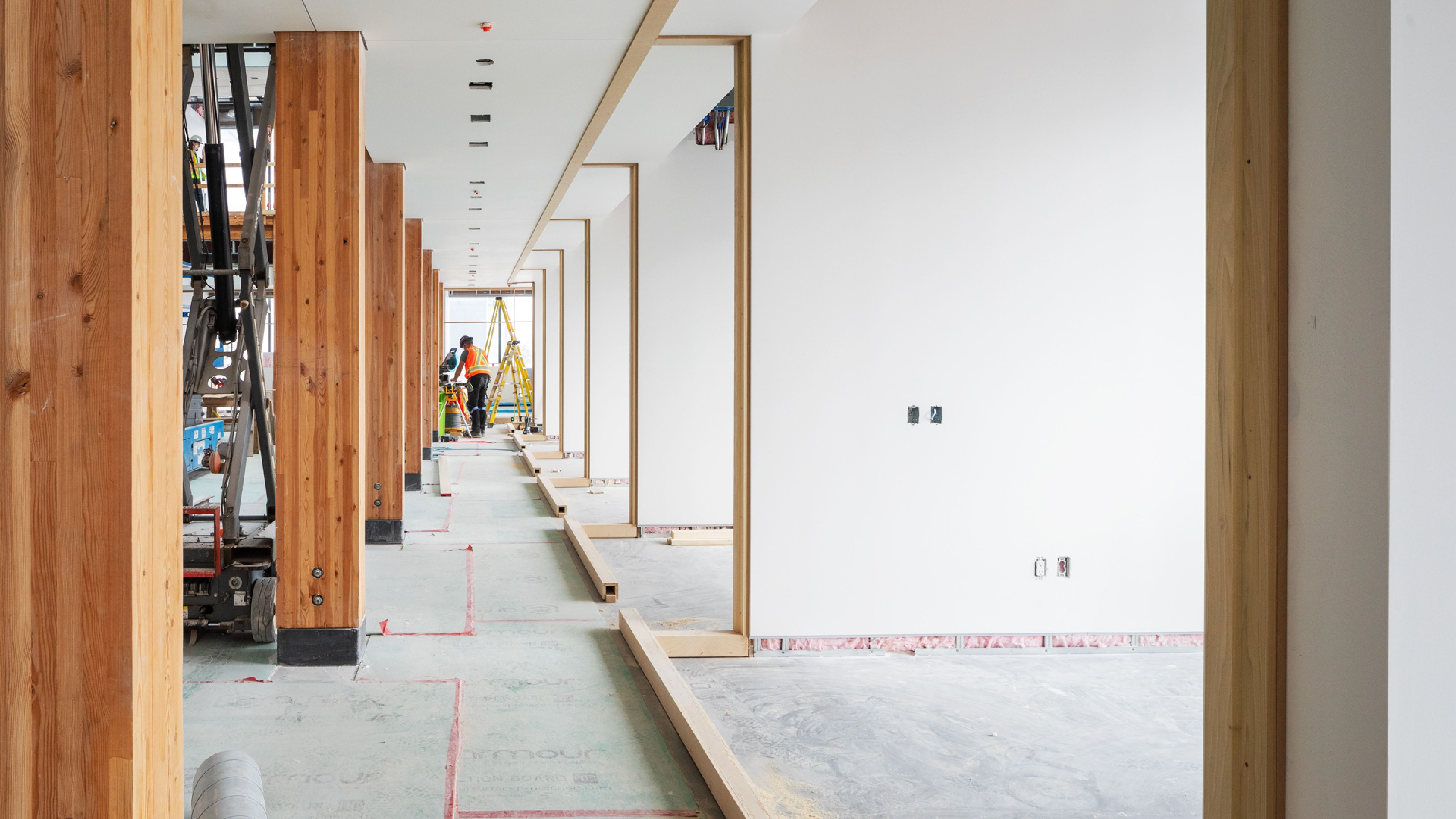
Furthermore, revisiting the concept of constructability by reviewing drawings before we go to tender plays a big role in keeping unexpected costs to a minimum during construction. If we’re reviewing contract documents and spot a material that’s over budget or a detail that will take more time to construct than planned, we’ll problem-solve together with the contractor, trades, and consultants to alter the approach, use a different product, or adjust the sequence of a build. This helps to avoid budget creep.
Interviewer: How does involving an architect during construction support code compliance, streamline inspections, and minimize delays?
Adam: Since building codes, accessibility rules, permitted materials, fire safety, structural compliance, and inspections are non-negotiable, an on-site architect serves as the first line of defence on a build. They bring their knowledge of materials and methods, developed from the design phase through construction documentation, and apply that knowledge on site—ensuring that details are followed to code.

In my role, I vet GC questions and shop drawings against the building code and design intent, making sure that nothing slips through that could lead to a stop-work order, permit delay, or re-work later. I also perform periodic observations: walking the site, reviewing actual assemblies versus drawings, and flagging anything that doesn’t translate from paper to real life. I help make sure that the building is built within regulatory and schedule constraints, so the client isn’t hit with unexpected compliance costs, inspection failures, or lengthy corrective work.
Interviewer: For clients unfamiliar with construction, do you have three pieces of advice as this phase begins on their project?
Adam: My first piece of advice to a client is to walk through what to expect in design, permitting, construction, and close-out with their architect. The build is not just about drawings—it’s about site conditions, approvals, contractor mobilization, inspections, and warranties.
If a client has their “ducks in a row” and knows what they want, we can usually avoid surprises. If they’re still figuring things out, our design team can help extract and conceptualize that information, identify site-specific constraints, and set expectations early.
I also encourage clients to clarify roles. If they’re thinking of managing the project themselves, we can talk through what’s realistic so the budget, schedule, and design stay on track. Coming from a GC background, I bridge the field and design sides to help clients understand what we do, what the contractor does, and what the owner’s role is.
And finally, if a client ultimately decides to manage the project, keeping the process practical and manageable by setting expectations at the start helps keep the client, consultants, and GC aligned. By clarifying roles and responsibilities early, everyone knows who makes which decisions, which is critical because when decisions arise, they often require input from multiple stakeholders to ensure the path forward is done right, meets code, and is cost-effective. That way, the client and team won’t be caught off-guard mid-build when things change, decisions are required, or trade coordination is needed.
Construction has many moving parts—and my role is to bring together architects, designers, technologists, general contractors, trades, and project managers to steer the build toward successful completion.
Have more thoughts or questions? Connect with Adam Morris to continue the conversation.
This concludes our blog series on What Do Architects Do.
Throughout this series, we’ve explored what architects really do: shaping vision, coordinating experts, integrating interiors and sustainability, guiding planning and design, and supporting construction. We hope you found it compelling, insightful, and helpful.
To explore the first five posts in our six-part educational series “What Do Architects Do” follow the links below:
Blog 1: What Architects Do & Why You Need One.
Blog 2: What Do Architects Do When They Work With Interior Designers?
Blog 3: What Do Architects Do During the Design And Planning Stages?
Blog 4: What Do Architects Do When Collaborating With Other Professionals?
Blog 5: What Do Architects Do to Integrate Sustainability Into Your Project?
*The information provided in this series is for educational purposes only and is not intended as professional advice. For guidance specific to your project, please consult a licensed architect or other qualified professional.
Want to be the first to know about new blog articles? Follow us on LinkedIn or Instagram.

